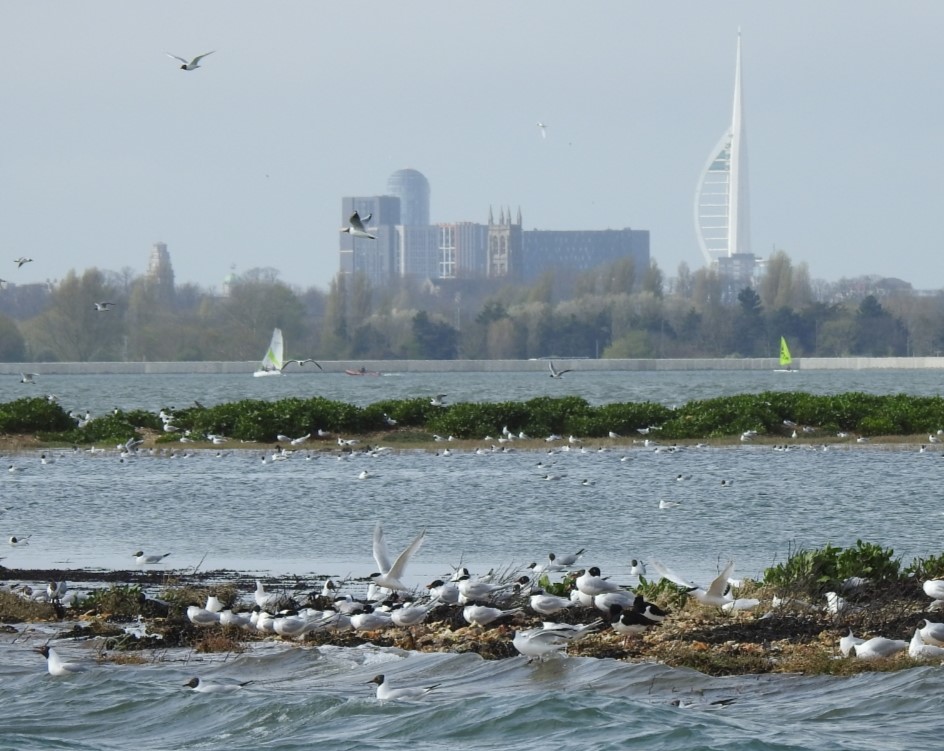
Live from Langstone Harbour
The Solent is home to at least 12,000 pairs of breeding seabirds. They nest on the shingle and saltmarsh islands of our natural harbours, on small islands in saline and freshwater lagoons, on set aside areas of our beaches and occasionally on our rooftops!
The largest colonies within the Solent are home to ground nesting seabirds that build their nests directly on the shingle and saltmarsh. These colonies are a changing mix of Black-headed Gulls, Sandwich Terns, Common Terns, Mediterranean Gulls, Oystercatchers, Ringed Plover, Little Terns and more.
This webcam shows a close up view into part of the Black-headed Gull colony site on the RSPB’s Langstone Harbour reserve, just a couple of miles from Portsmouth. The first chicks started hatching at the end of May and are now growing by the day. Nesting and the raising of chicks will typically continue to early July, with the last fledged birds leaving around the middle of the month.
The RSPB is carrying out active conservation here to remove rats that are predating eggs and birds, to restore and create habitat and to protect them from an array of pressures.
Top tip: See the nesting seabirds in the highest quality (1080p) by using the cog symbol (top right of the video) to select this option.
This livestream was funded and installed as part of the RSPB’s LIFE on the edge project, and continues as part of the Solent Seascape Project with our RSPB partners. The technology was supplied by Wildlife Windows.
Project LIFE on the edge: improving the condition and long-term resilience of key coastal SPAs in S, E and N England is supported by the LIFE Programme of the European Union.
The Solent Seascape Project is working to restore, create and enhance seabird colony sites across the Solent, with the aim of seeing the population declines halt, stabilise and then start to recover. Discover more in the video below: